Aikido Westchester, NY - Martial Arts, Self Defense and Fitness
                       
                              - About Aikido Westchester
About Aikido
Westchester
True Victory is Victory over the Self

Aikido Westchester - Overview of Aikido

Next question (compare arts) or Contents of section

Aikido is a Japanese martial art developed by Morehei Ueshiba as a vehicle to bring peace to humanity, especially in light of the devastating
death and destruction seen in World War II. The profound need for peace and security of that time certainly resonates with our current
environment of terrorism and instability. Aikido can be distinguished from other martial arts through the movement and the methods of training.
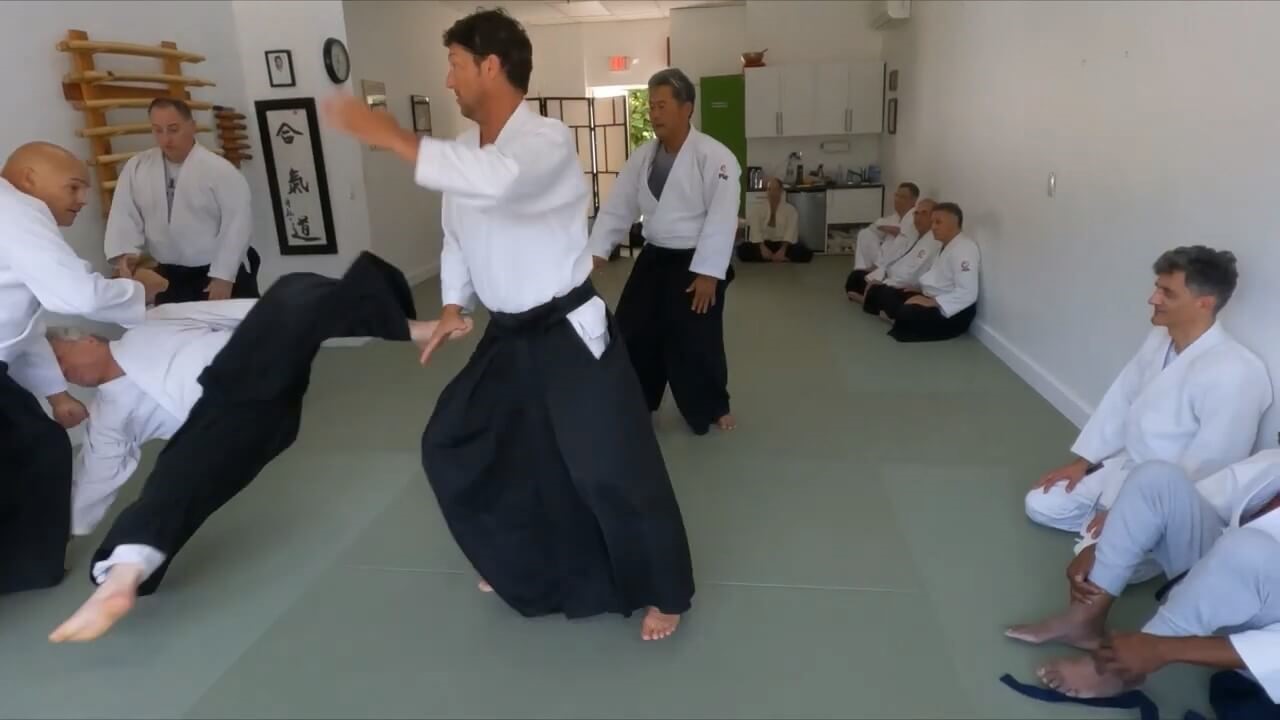
The techniques of Aikido are circular in nature, leading the opponent by using their own force while inflicting a minimum of harm. For that reason
throws, joint locks and pins are emphasized over strikes as the means of self-defense. Multiple attacks are used to emphasize the movement as
well. The training methods do not include competition or Kata forms as in other martial arts.  Instead techniques are taught through repetitive
practice as in modern sports.  In addition, while all martial arts teach the development of positive character, most focus on self defense via
destructive techniques first.  In Aikido, this order is reversed.  Study of the principles through the practice of technique then enables one to apply
these lessons in their daily life at an earlier juncture, resulting in a sense of peace, security, and genuine happiness. Improvements in physical
conditioning, self-defense and personal growth all occur through this method of training.

Aikido Westchester - 1)  How Does Aikido Compare with Other Martial Arts

Previous question (overview), next question (self defense) or Contents of section

Martial Arts in Westchester County are offered with a fair amount of variety.  Japanese forms of self defense include Karate, Judo, Aikido and Ju
Jitsu.  Chinese martial arts include Kung Fu, Tai Chi, etc.  Korean self defense includes Tae Kwon Do and Hapkido.  Across cultures, broad
similarities may be observed.  For example, Karate, Kung Fu, Tai Chi, and Tae Kwon Do all emphasize strikes and blocks.  Judo, Tai Chi Chuan
and some forms of Jujitsu involve taking balance (sometimes like wrestling), and Aikido emphasizes movement derived from Japanese fencing.  At
the same time, virtually all martial arts utilize movement, strikes, wrist locks, and throws of one kind or another.  So in some ways they are different
and in other ways they are similar.  However, all martial arts possess another dimension, or path, which ultimately leads to acts of selflessness
and compassion for others as the true source of strength and legitimacy.  Understanding compassion for others in a martial setting actually
benefits oneself by closing openings to being countered in technique.  While different methods of training are available for people of varying
dispositions, the ultimate goal is either the same or similar in each art, to build character.  One therefore must respect every art in terms of their
potential effectiveness.  Serving lower Westchester County and the Bronx, Karate, Tae Kwon Do, Kung fu, Tai Chi Chuan, etc. are available in
many communities such as Yonkers, New Rochelle, White Plains, Scarsdale, Hartsdale, Bronxville and so on.  Judo is available in Scarsdale, but
possibly also in White Plains, New Rochelle and Yonkers.  Aikido is available in Scarsdale/Eastchester, Bedford and White Plains.  A novice
should observe classes in each of the three main lines of self defense, such as Karate, Judo and Aikido before deciding which martial art best
suits their disposition.  Look for what makes the most sense to you, and what you think you might enjoy the most.  Then further refine your search
by observing classes from several schools in the particular type of art before selecting a dojo, or school.  We are happy to suggest other schools
for individuals to visit and further their understanding of the martial ways.
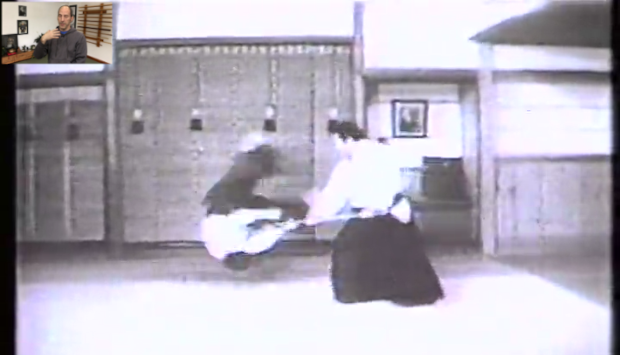
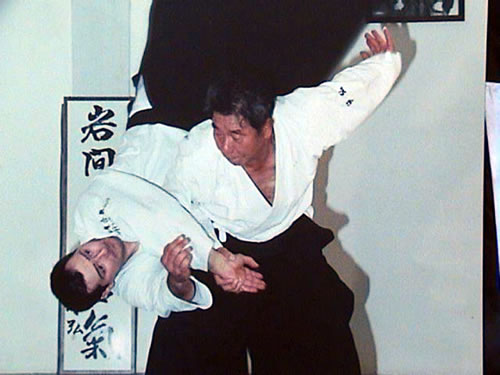
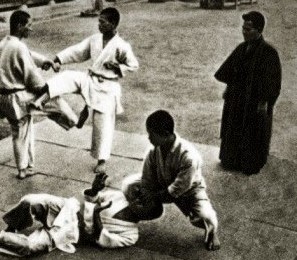
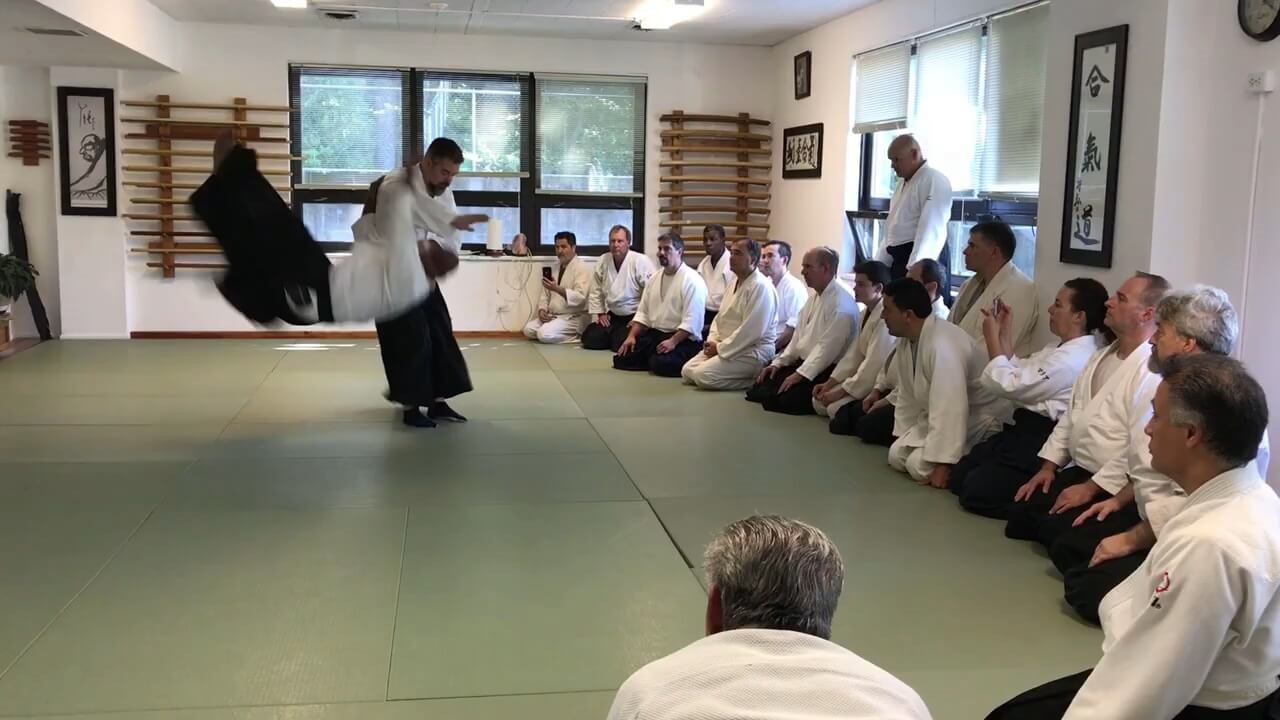
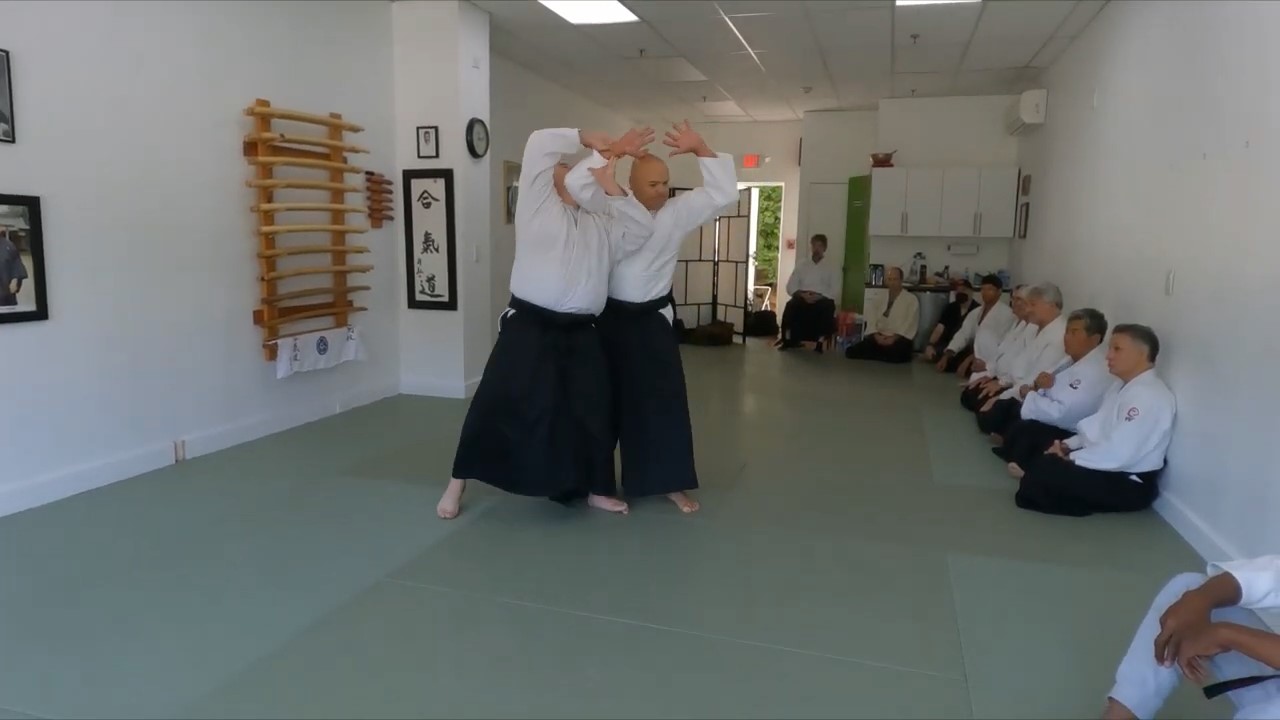
O'Sensei downs an attacker utilizing timing

Aikido Westchester - 2)  For Self-Defense, which is the Best Martial Art?

Previous question (compare arts), next question (health) or Contents of section

Many practitioners of Aikido say Karate is more effective, while many practitioners of Karate seem to think Aikido is more effective.  In some
circles, they conclude that martial arts such as Karate produce self defense benefits much more quickly than in Aikido, but this point of view is
based upon a superficial understanding of both arts.  Ultimately, it depends upon the person and circumstance of training.  All martial arts work.

From a self defense perspective, Aikido is unique in its lack of powerful strikes or direct throws from grappling,  emphasizing building character
from the outset via compassion instead.  (More depth can be found in FAQ and the All Martial Arts Section of this web site.)  Karate, Tae Kwon
do, Kung Fu and Tai Chi Chuan all emphasize strikes of a powerful nature.  Aikido uses strikes only to distract an attacker, with the intent of
minimizing harm while performing a technique, thus more thoroughly emphasizing an attitude designed to avoid the confrontation at an earlier
stage in practice.  While characterized as defensive in some circles, Aikido can be quite offensive and deadly.  However, while aspects are not
emphasized, they can be discovered through training as the student becomes successively more advanced.

While Judo and Jujitsu often involve more grappling than Aikido in one on one situations, unique to Aikido is the emphasis on multiple attacks,
and so one should not get bogged down grappling with one attacker.  Circular movement, as opposed to grappling, then becomes a primary
means to evade the power of an attack, control the attacker and then throw or pin them to the ground.  A good Judo player can handle multiple
attackers, but this is not the emphasis from the outset.  

In addition, in Aikido there is no use of  competition as a training method for several reasons: competition is unrealistic in that it requires rules,
which are not present in actual self-defense circumstances.  Success in competition, with rules and an artificial setting provide a false sense of
security in a real combat situation.  Competition also tends to encourage a desire to win, to defeat, dominate or overpower another human being,
all of which increases the hostility of the opponent and leaves on open to being countered.  Competition can be an excellent means to teach one
to close their openings to be countered as well as pay attention consistently, and by emphasizing effort in the absence of a desire to win, but
these lessons can be learned through other more traditional methods as well, such as those employed in Aikido.  Further, the multiple attacks,
with and without  weapons, add a realistic dimension to Aikido training.  Ultimately, both competitive and noncompetitive methods should work
equally as well.

These are the primary distinctions between the arts for self defense purposes.  Ultimately, the degree to which one art is more effective than
another depends upon a person's disposition and effort as well as availability of quality instruction.  As a word of caution, however, if you go into
martial arts training purely to learn self defense, your ability to accomplish your goal will be limited.  After choosing a school, it is better to relax
and simply enjoy the practice.  Your abilities in defending yourself will improve before you know it, and you will enjoy yourself at the same time.
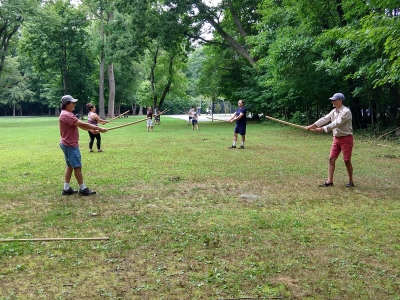
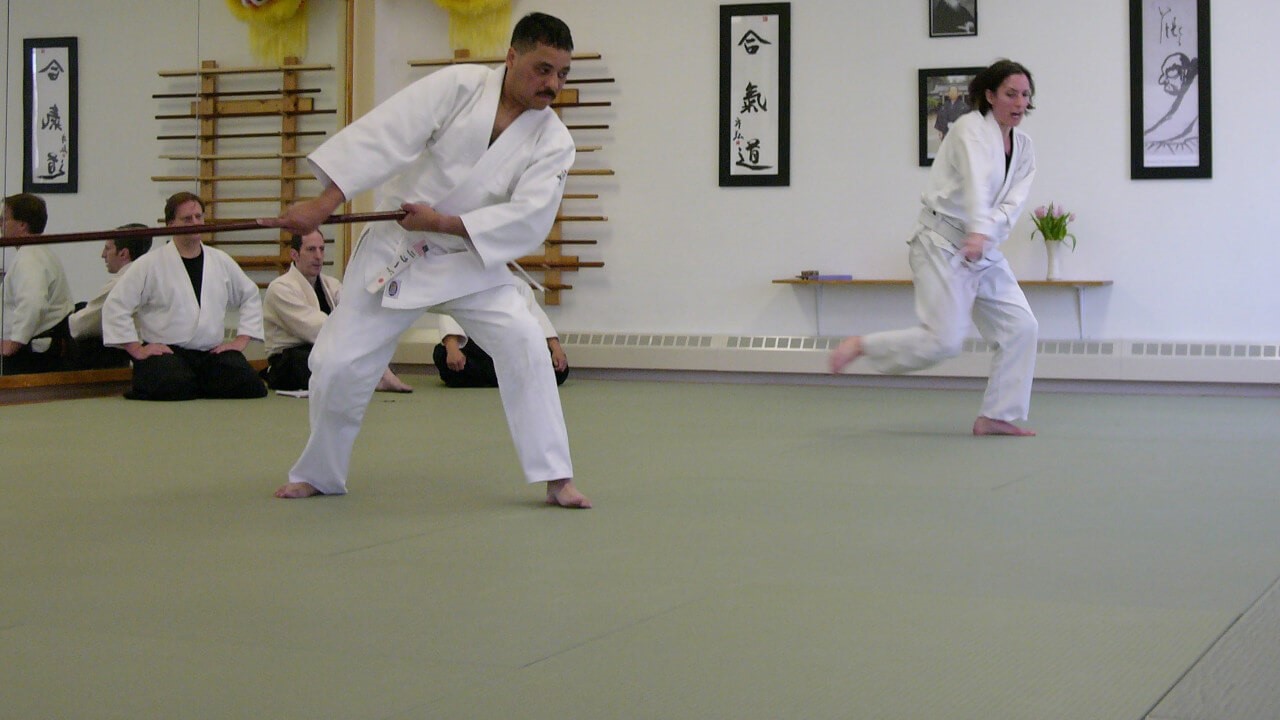
O'Sensei developed staff movements from spear techniques

Aikido Westchester - 3)  What are the Physical/Health Benefits of Aikido as Compared to other Martial
Arts?

Previous question (self defense), next question (look for school) or Contents of section

Many people frequent fitness centers or health clubs to condition their bodies.  However, not everyone finds that form of exercise enjoyable in the
pursuit of general fitness.  What is it one gains from working out at a gym?  There are repetitive motions, but what do those motions accomplish
and what do they teach you?  In a gym, exercise machines do not teach about relaxation and how to generate the substantial power locked inside
one's body.  Aikido is aerobic exercise practiced in a relaxed setting.  The practice is enjoyable and one may derive other benefits that apply to
different areas of their lives.  While the health benefits of this approach are perhaps understated in this section, consider that exercise reliant
upon tension and disruptions in natural breathing patterns may be partially damaging to one's health despite the lack of clinical data available.

Initially in Aikido, training is at a slow pace until falling techniques are mastered.  Then, practitioners may adjust the speed to work out at the
desired level.  At that point, training may be quite intensive or modest.  After a certain age, such as 25-30, intensive practice is not encouraged in
favor of developing a deeper understanding of the art, yet the exercise is still quite aerobic.  Other martial arts offer similar opportunities for
exercise while maintaining relaxation, and this is the benefit of these forms of training over a typical workout at a gym.  However, the specific
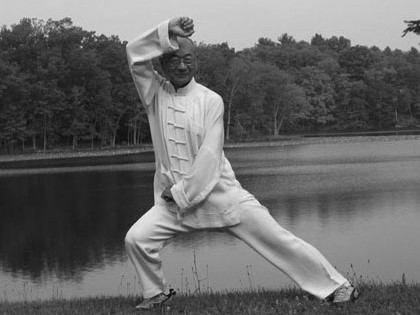
emphasis on health benefits in Tai Chi Chuan as related to the practice of Chinese medicine may be of particular interest to some.  For more
information, speaking with a qualified Tai Chi Chuan instructor is recommended.
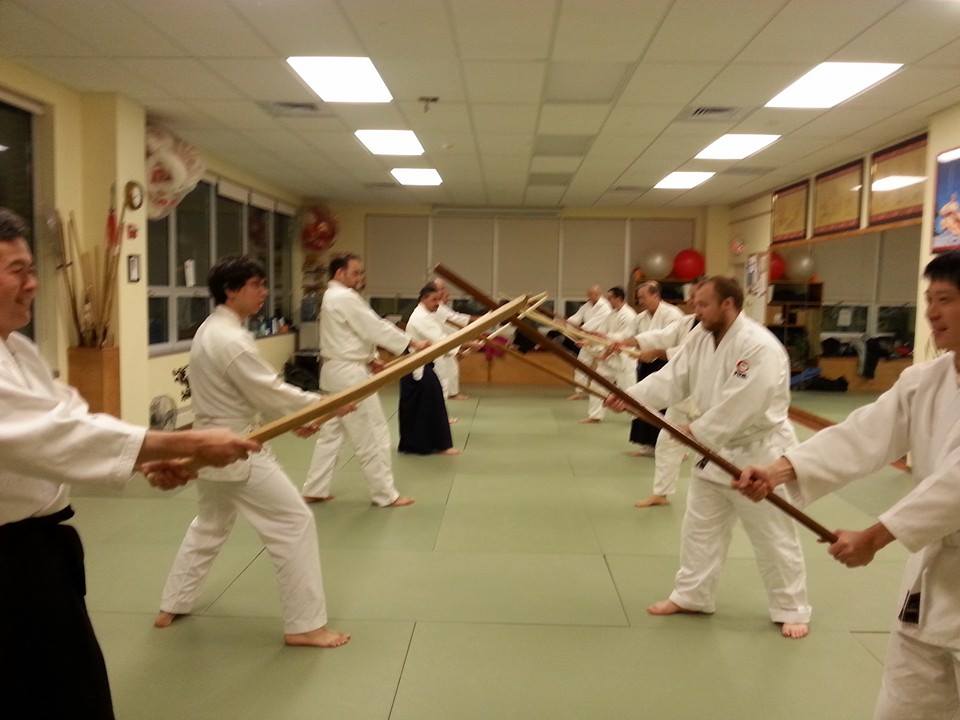
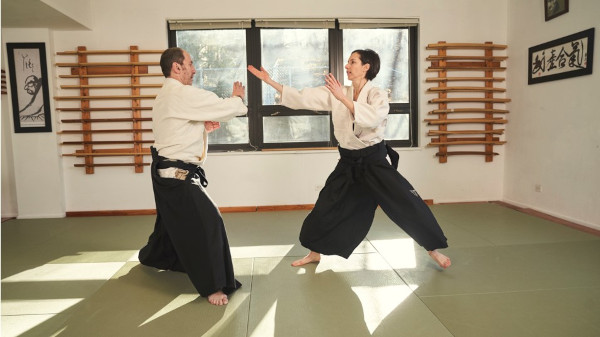
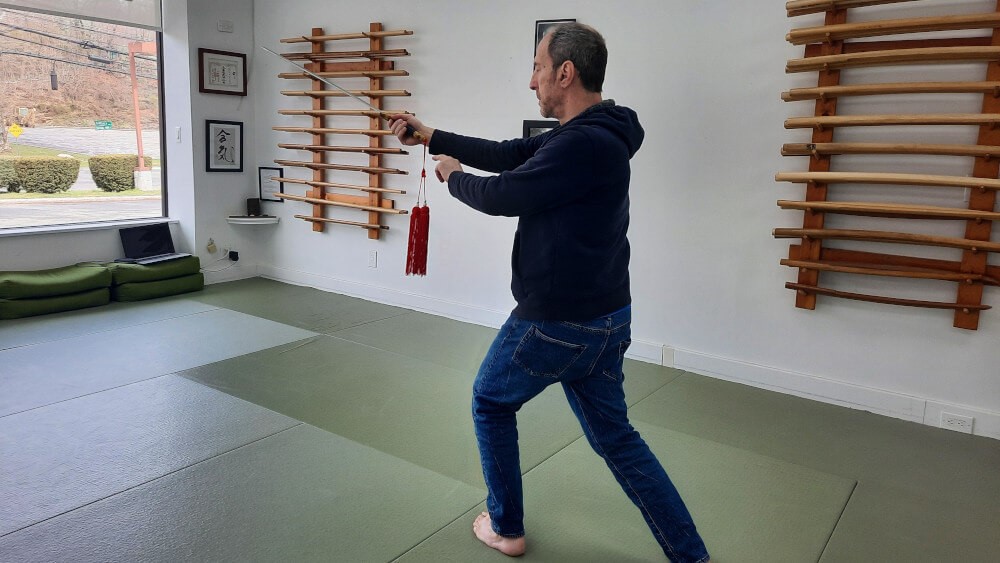
Much of Aikido is derived from sword (Ken) movements
Aikido Westchester Quick Bulletin Board:
Beginners Special - 4 Classes for $25 plus $40 value (See Schedule & Dues on left for details)
Meditation classes started on Sundays from 2-3pm
New adult class 6:15-7:15pm Wed
New children's class 5:30-6:15pm Wed

Class Schedule:                Aikido Westchester                Meditation
About Aikido Westchester
(Contents below - scroll down)


Overview of Aikido - Defining characteristics of Aikido

1)  How Does Aikido Compare with Other Martial Arts for the Westchester county area? The Basics (read Overview of Aikido first)

2)  For Self-Defense, which is the Best Martial Art?  More depth as it relates to self defense.

3)  What are the Physical/Health Benefits of Aikido as Compared to other Martial Arts?

4)  What is the philosophy of Aikido?


FAQ - What are the different styles and organizations in Aikido; is a full time teacher better than part time, etc...

For specific information on the practice of Aikido in Westchester, see the Scarsdale Aikido link above, as detailed information on the curriculum
and instructor are available.  To examine other martial arts and how to search for a school, see the All Martial Arts Section.