Tai Chi and Kung Fu Classes at Still Mind Aikido Westchester

Comparing Tai Chi Styles in Westchester

Tai Chi
Styles

Learn about the different styles of tai chi.

Tai Chi
Training

“The chin [intrinsic strength] should be rooted in the feet, generated from the legs, controlled by the waist, and manifested through the fingers. If correct timing and position are not achieved, the body will become disordered and will not move as an integrated whole; the correction for this defect must be sought in the legs and waist…The whole body should be threaded together through every joint without the slightest break.”

Attributed to Tai Chi Founder Chang San-feng (est. 1279 -1386)
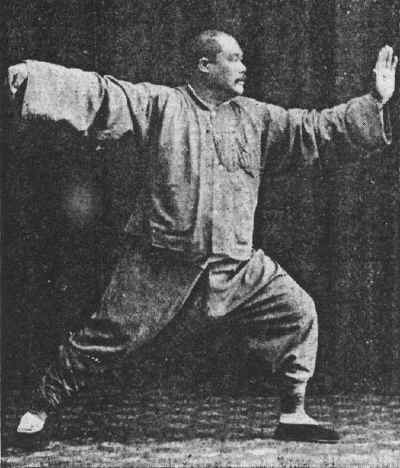
Yang Cheng Fu

Yang Cheng Fu - Single Whip

Grandson of Yank Lu Chan, Yang Cheng Fu popularized tai chi throughout China.

Yang Style Tai Chi

Tai chi is known for is slow moving and flowing forms. While it appears graceful, it would be deceiving to suggest it is easy to do. The more one puts into the practice, the greater the benefits. Approached properly, one should always target the highest goal of success. Falling short of a high goal is better than falling short of a low goal. The practice is both meditative and very technical. Great improvements in leg strength and balance can occur through training, but only with very diligent and daily practice. Tai chi is also known for using the meridians in Traditional Chinese Medicine for health. Learning is typically a slow process as one learns one move at a time for a very long form. Simply following someone else doing the form is of little benefit as one should learn how to do a complete form themselves, which can take a couple of years at a minimum. But with persistent practice, one learns continuously and completes the form.

The main modern styles of tai chi are Chen, and from there Yang spawned Wu and Sun styles. Sun style typically also incorporates the Chinese Martial Arts of Hsing Yi and Bagua. In the NY metropolitan area, Cheng Man-ching was a famous student of the grandson of the Yang Style founder, but he strangely morphed tai chi from its original design by removing all use of physical force. Some tai chi schools nowadays do not mention anything about where their style comes from. Best practice does suggest having an understanding of how one's style is connected historically.

Tai Chi Classes in Westchester, NY: Availability

Tai chi classes have become more limited recently. Practice may be outdoors or in public spaces such as a library or medical facility. The knowledge level of the teachers can vary widely when those responsible for hiring them come from a science/medical background or work at a library, as they do not know what to look for in tai chi, or how to interact with the program.

Mr. Yu
Yang Tai Chi

Mr. Yu

Mr. Yu tai chi master
Mr. Yu

Tai Chi and Shaolin Kung Fu

Our system begins with tai chi forms, which are rich in detail and precision to understand body mechanics and efficiency. They are slow moving and can take several years to learn. Mr. Yu's lineage is from early Yang Style. However, in order to add forms with physical force, Mr Yu used Shaolin Kung Fu forms, which can add an aerobic element to the practice.

Mr. Yu set the example of how to pursue the highest goal in training. While he was unable to access all elements of early Yang Style, he looked deeply into the Shaolin forms and fused the principles with tai chi. He then consulted with very high level Wu Style practitioners to verify his reconfiguration of tai chi was on track with the principles of the great practitioners such as Yang Lu Chan. He also understood what martial artists across the spectrum have similarly communicated - that it is necessary to use force in martial arts. The point is to learn how to control it.

He was known to encourage daily "exercise." If a student claimed they had no time, he would ask, "did you have time to eat this week?...did you have time to breathe?" When they said yes, he replied, "then you have time exercise." Daily practice ensured his students achieve the greatest benefits.

FAQ

Where did the idea that all tai chi must be soft and relaxed come from?

Cheng Man-ching was a student of Yang Cheng Fu. His teacher taught a secret form that used fa-jing, or explosive power. Cheng Man-ching never learned that form and assumed tai chi must always be soft and relaxed. Other teachers in the Yang tradition outside this lineage generally do not agree.

Your First Class
Is Free.

No pressure. No contracts. We'll reach out within 24 hours to confirm your class.