Aikido in Westchester, NY - Martial Arts, Self Defense and Fitness - About Aikido
|
True Victory is Victory over the Self
|
Overview of Aikido:
Next question (compare arts) or Contents of section
Aikido is a Japanese martial art developed by Morehei Ueshiba as a vehicle to bring peace to humanity, especially in light of the devastating
death and destruction seen in World War II. The profound need for peace and security of that time certainly resonates with our current
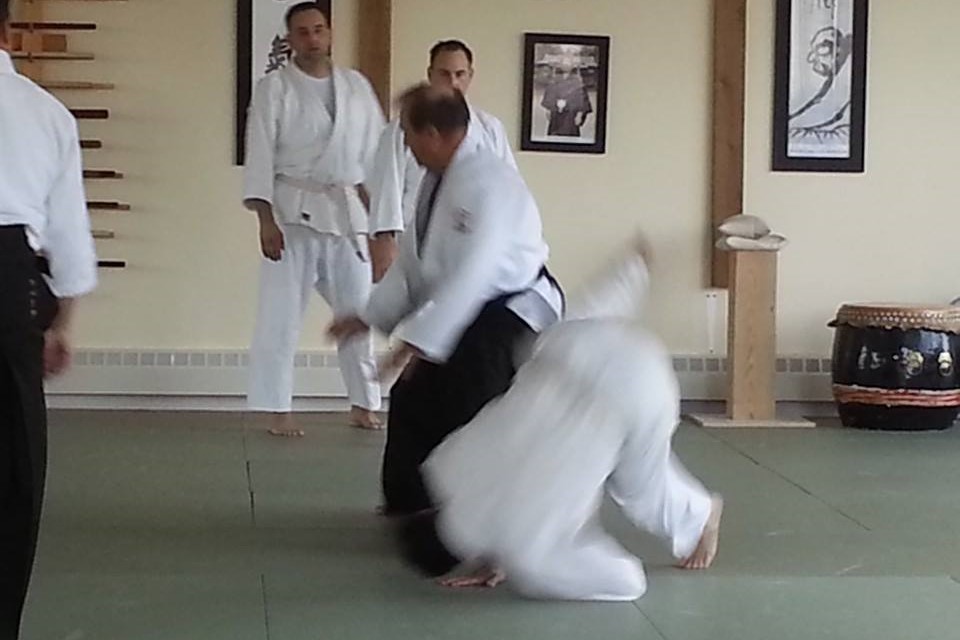
environment of terrorism and instability. Aikido can be distinguished from other martial arts through the movement and the methods of training.
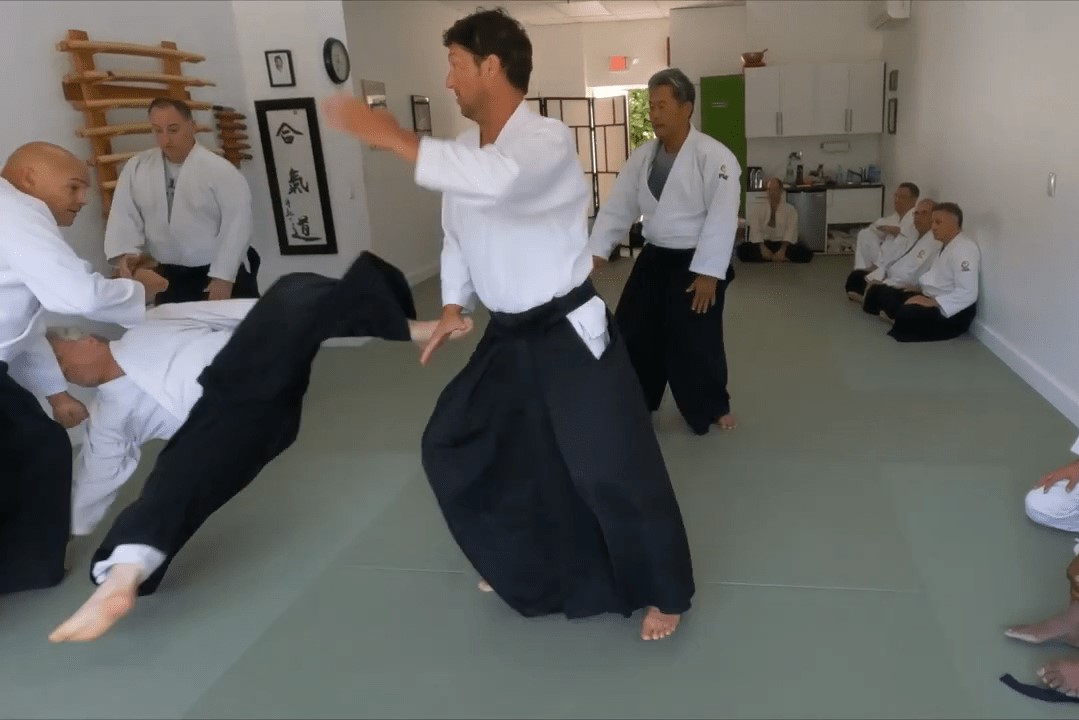
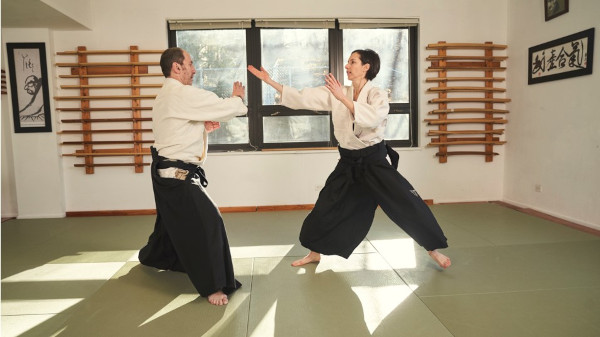
The techniques of Aikido are circular in nature, leading the opponent by using their own force while inflicting a minimum of harm. For that reason
throws, joint locks and pins are emphasized over strikes as the means of self-defense. Multiple attacks are used to emphasize the movement as
well. The training methods do not include competition or Kata forms as in other martial arts. Instead techniques are taught through repetitive
practice as in modern sports. In addition, while all martial arts teach the development of positive character, most focus on self defense via
destructive techniques first. In Aikido, this order is reversed. Study of the principles through the practice of technique then enables one to apply
these lessons in their daily life at an earlier juncture, resulting in a sense of peace, security, and genuine happiness. Improvements in physical
conditioning, self-defense and personal growth all occur through this method of training.
1) How Does Aikido Compare with Other Martial Arts For the Novice in Southern Westchester County or
the Bronx:
Previous question (overview), next question (self defense) or Contents of section
Martial Arts in Westchester County are offered with a fair amount of variety. Japanese forms of self defense include Karate, Judo, Aikido and Ju
Jitsu. Chinese martial arts include Kung Fu, Tai Chi, etc. Korean self defense includes Tae Kwon Do and Hapkido. Across cultures, broad
similarities may be observed. For example, Karate, Kung Fu, Tai Chi, and Tae Kwon Do all emphasize strikes and blocks. Judo, Tai Chi Chuan
and some forms of Jujitsu involve taking balance (sometimes like wrestling), and Aikido emphasizes movement derived from Japanese fencing. At
the same time, virtually all martial arts utilize movement, strikes, wrist locks, and throws of one kind or another. So in some ways they are different
and in other ways they are similar. However, all martial arts possess a spiritual dimension, or path, which ultimately leads to acts of selflessness
and compassion for others as the true source of strength and legitimacy. While different methods of training are available for people of varying
dispositions, the ultimate goal is either the same or similar in each art, to build character. One therefore must respect every art in terms of their
potential effectiveness. Serving lower Westchester County and the Bronx, Karate, Tae Kwon Do, Kung fu, Tai Chi Chuan, etc. are available in
many communities such as Yonkers, New Rochelle, White Plains, Scarsdale, Hartsdale, Bronxville and so on. Judo is available in Scarsdale, but
possibly also in White Plains, New Rochelle and Yonkers. Aikido is available in Scarsdale/Eastchester and White Plains. A novice should
observe classes in each of the three main lines of self defense, such as Karate, Judo and Aikido before deciding which martial art best suits their
disposition. Look for what makes the most sense to you, and what you think you might enjoy the most. Then further refine your search by
observing classes from several schools in the particular type of art before selecting a dojo, or school. We are happy to suggest other schools for
individuals to visit and further their understanding of the martial ways.

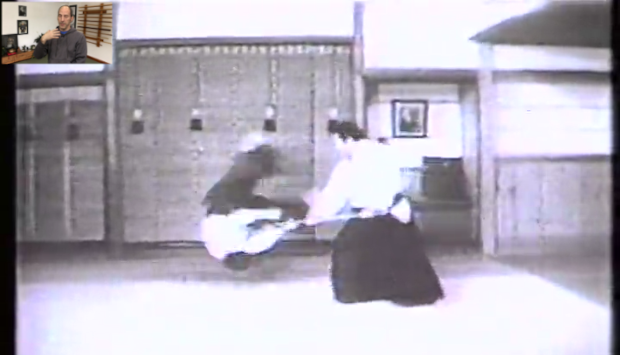
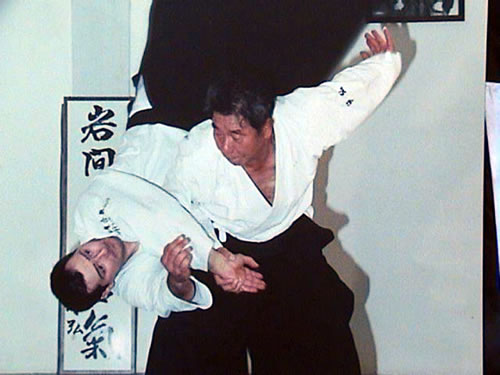
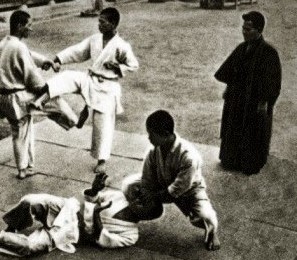
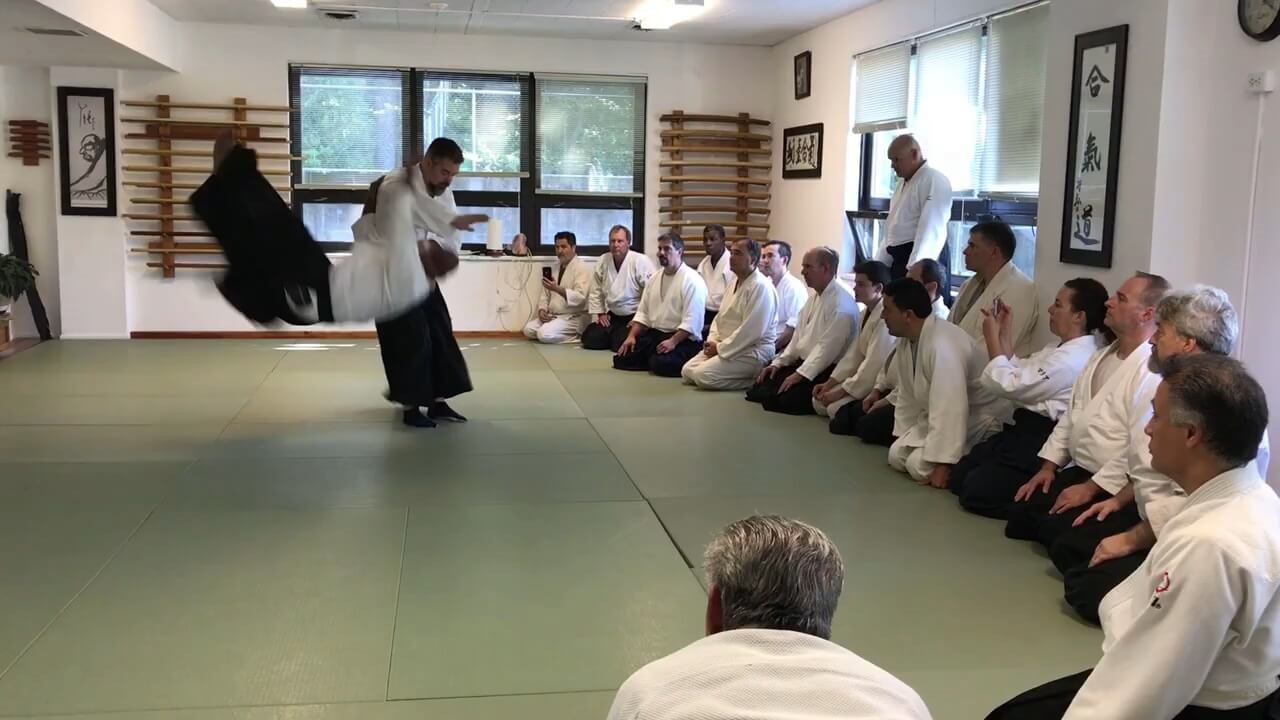
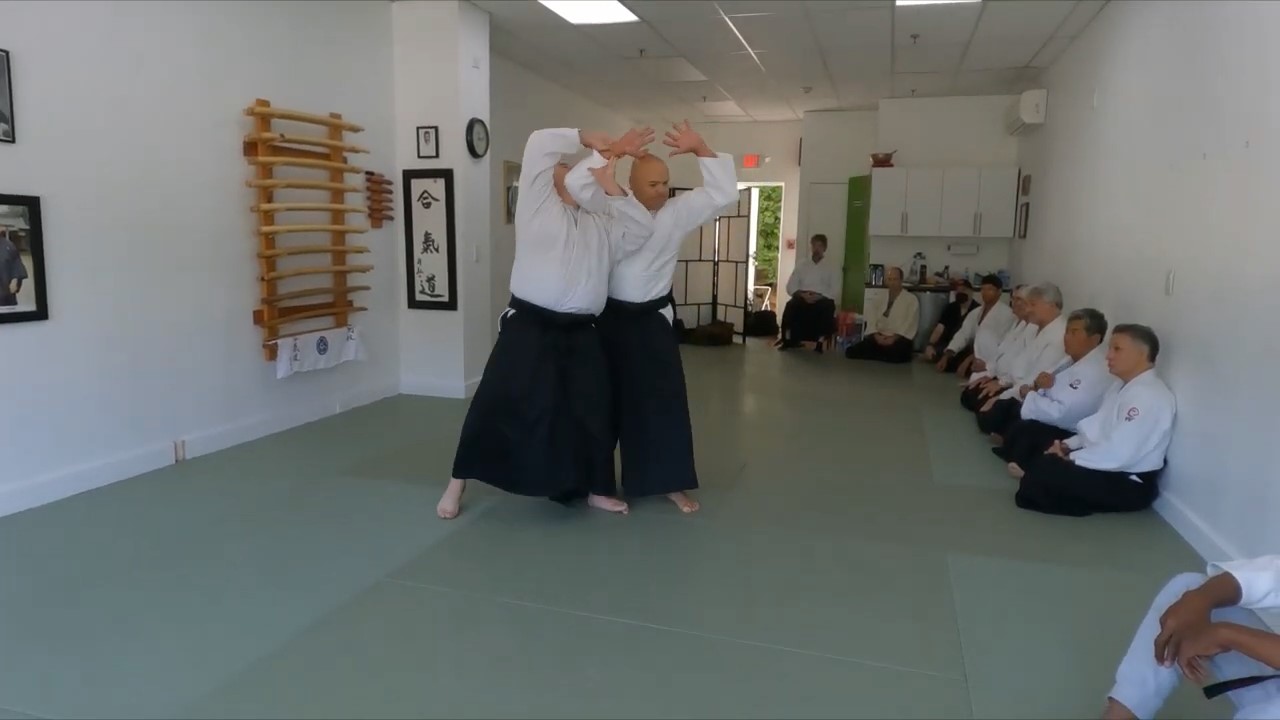
O'Sensei downs an attacker utilizing timing
2) For Self-Defense, which is the Best Martial Art?
Previous question (compare arts), next question (health) or Contents of section
In some circles, they say martial arts such as Karate produce self defense benefits much more quickly than in Aikido, but this point of view is
based upon a superficial understanding of Aikido. Ultimately, it depends upon the person and circumstance of training.
From a self defense perspective, Aikido is unique in its lack of powerful strikes or direct throws from grappling, emphasizing building character
from the outset via compassion instead. (More depth can be found in FAQ and the All Martial Arts Section of this web site.) Karate, Tae Kwon
do, Kung Fu and Tai Chi Chuan all emphasize strikes of a powerful nature. Aikido uses strikes only to distract an attacker, with the intent of
minimizing harm while performing a technique, thus more thoroughly emphasizing an attitude designed to avoid the confrontation at an earlier
stage in practice. While characterized as defensive in some circles, Aikido can be quite offensive and deadly. However, these aspects are not
emphasized in favor of the spirit of compassion, thus defending oneself becomes the primary objective over "winning."
In addition, in Aikido there is no use of competition as a training method, and there is an emphasis on circular movements in response to multiple
attack. Aikido, unlike other martial arts, does not utilize competition for several reasons: competition is unrealistic in that it requires rules, which
are not present in actual self-defense circumstances. Competition also tends to encourage a desire to win, to defeat, dominate or overpower
another human being, all of which is directly opposed to the underlying principle of the art as it relates to the elimination of the "selfish ego."
Competition is an excellent means to teach one to close their openings to be countered as well as pay attention consistently, but these lessons
can be learned through other methods. While Judo and Jujitsu often involve more grappling than Aikido in one on one situations, unique to
Aikido is the emphasis on multiple attacks, and so one should not get bogged down grappling with one attacker. Circular movement, as opposed
to grappling, then becomes a primary means to evade the power of an attack, control the attacker and then throw or pin them to the ground.
These are the primary distinctions between the arts for self defense purposes. Ultimately, the degree to which one art is more effective than
another depends upon a person's disposition and effort as well as availability of quality instruction. As a word of caution, however, if you go into
martial arts training purely to learn self defense, your ability to accomplish your goal will be limited. After choosing a school, it is better to relax
and simply enjoy the practice. Your abilities in defending yourself will improve before you know it, and you will enjoy yourself at the same time.

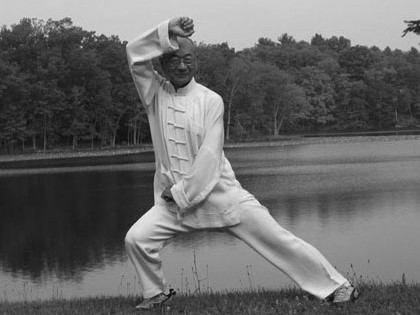
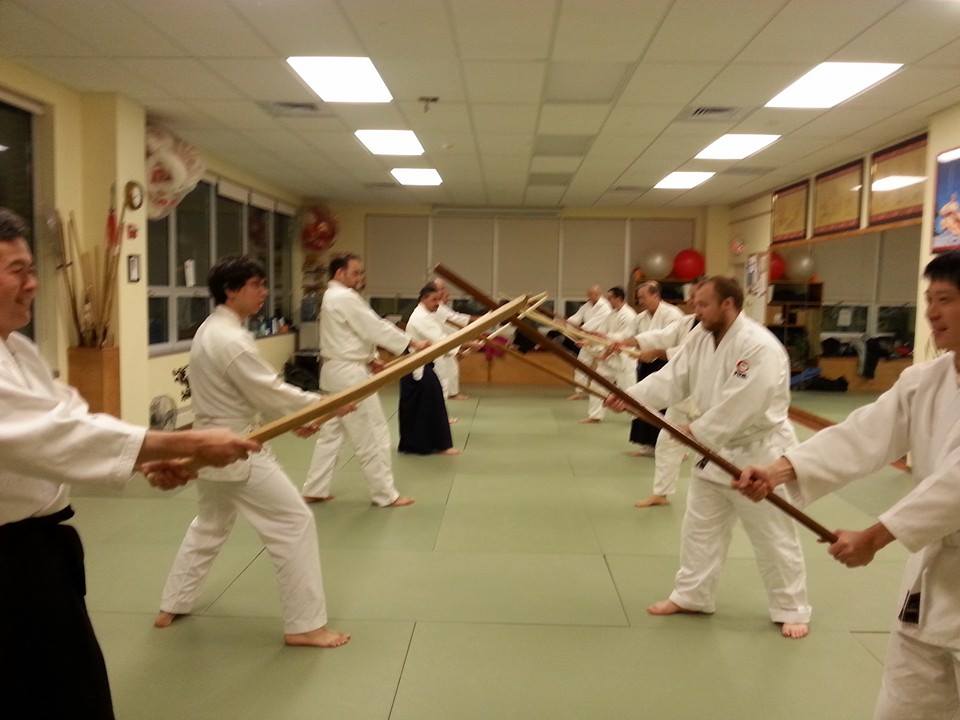
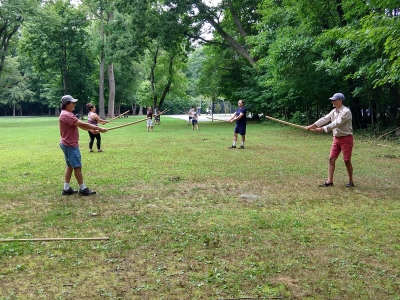
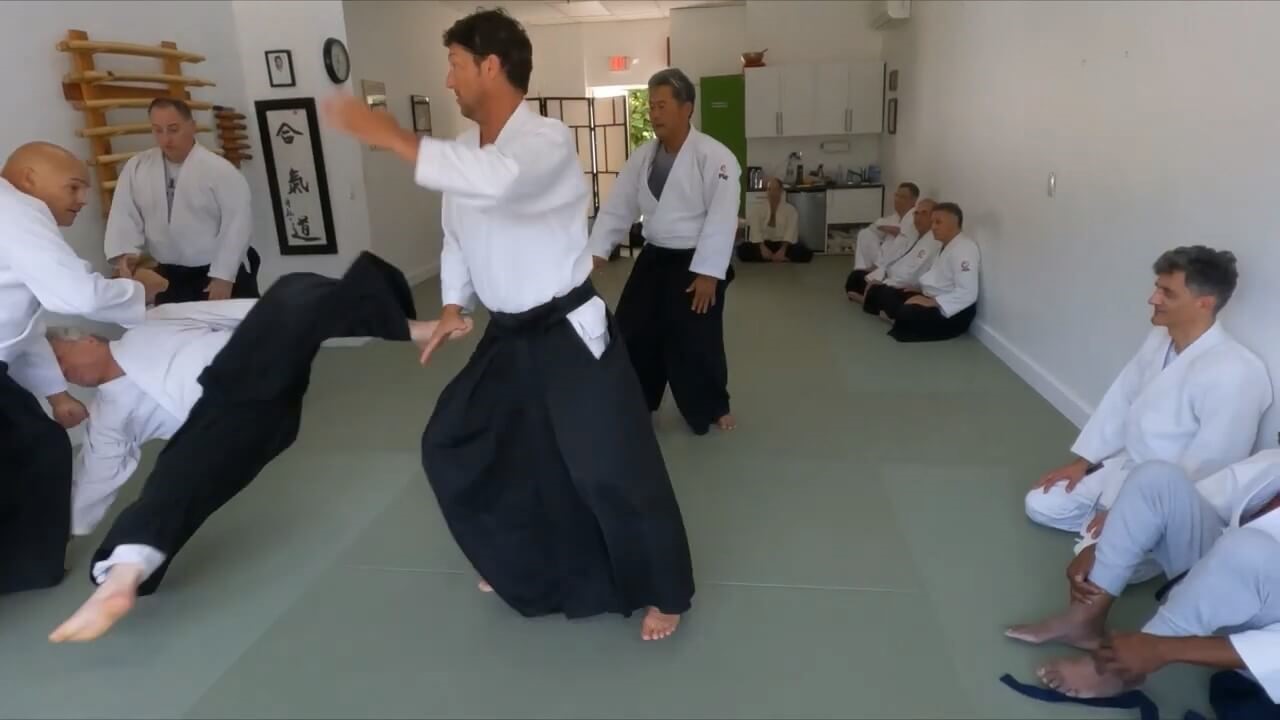
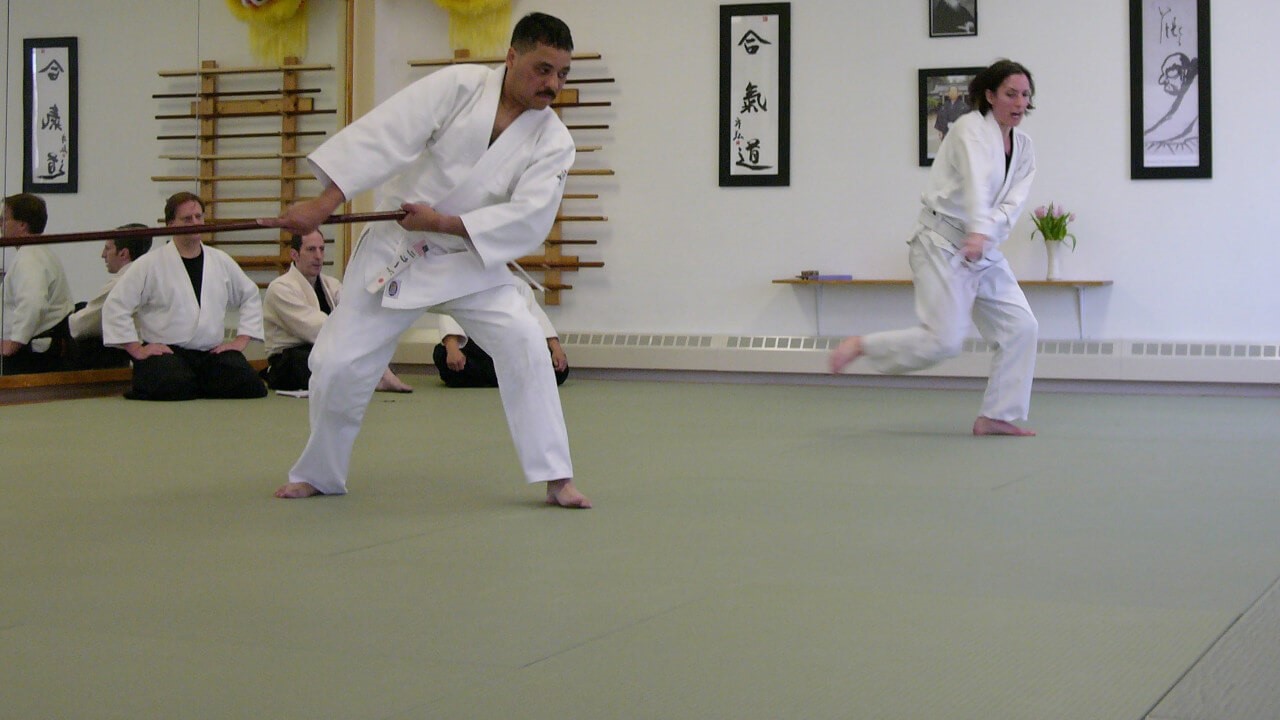
O'Sensei developed staff movements from spear techniques
3) What are the Physical/Health Benefits of Aikido as Compared to other Martial Arts?
Previous question (self defense), next question (look for school) or Contents of section
Many people frequent fitness centers or health clubs to condition their bodies. However, not everyone finds that form of exercise enjoyable in the
pursuit of general fitness. What is it one gains from working out at a gym? There are repetitive motions, but what do those motions accomplish
and what do they teach you? In a gym, exercise machines do not teach about relaxation and how to generate the substantial power locked inside
one's body. Aikido is aerobic exercise practiced in a relaxed setting. The practice is enjoyable and one may derive other benefits that apply to
different areas of their lives. While the health benefits of this approach are perhaps understated in this section, consider that exercise reliant
upon tension and disruptions in natural breathing patterns may be partially damaging to one's health despite the lack of clinical data available.
Initially in Aikido, training is at a slow pace until falling techniques are mastered. Then, practitioners may adjust the speed to work out at the
desired level. At that point, training may be quite intensive or modest. After a certain age, such as 25-30, intensive practice is not encouraged in
favor of developing a deeper understanding of the art, yet the exercise is still quite aerobic. Other martial arts offer similar opportunities for
exercise while maintaining relaxation, and this is the benefit of these forms of training over a typical workout at a gym. However, Tai Chi Chuan
and other internal arts may offer health benefits of a different nature as related to the practice of Chinese medicine. For more information,
speaking with a qualified Tai Chi Chuan instructor is recommended.

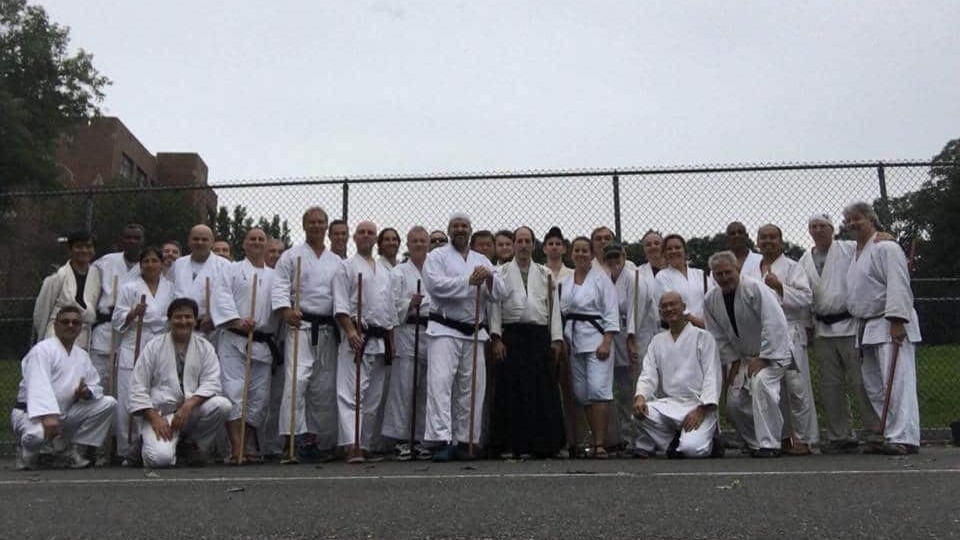
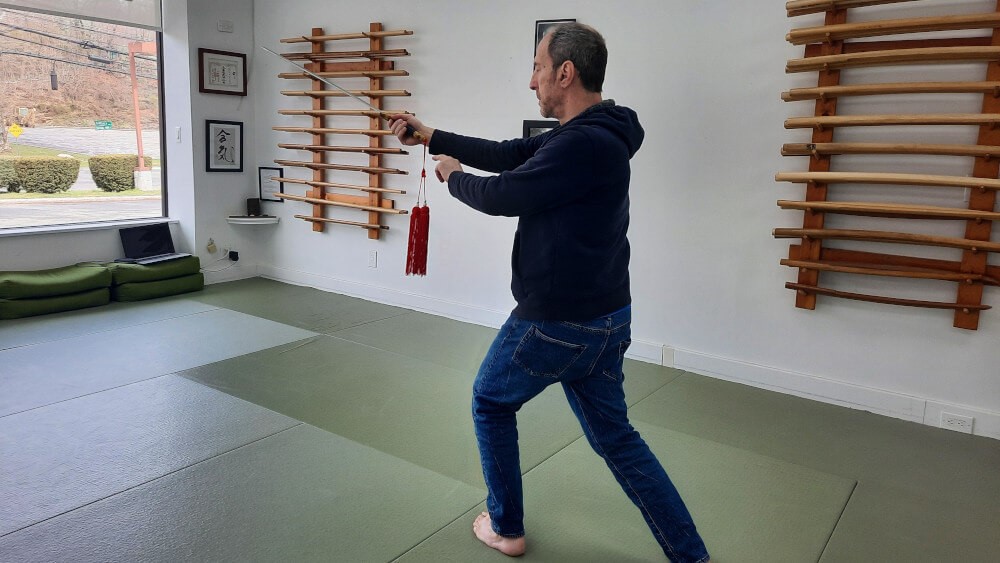
Much of Aikido is derived from sword (Ken) movements
4) So How do I Look for a School? (Case Studies)
Previous question (health) or Contents of section
There are two basic methods of evaluating the instructor: (1) what you perceive directly, and (2) what you can establish through indirect
examination. However, before discussing them, some of the preliminaries to this stage are the same for any martial art, and are therefore
discussed in the All Martial Arts section. Moving forward, of course you should determine your comfort with the instructor and the school
personally, but the information below addresses primarily consideration of the instructor's level of knowledge.
A good example of the first method, direct perception, was expressed by a friend of mine who decided to quit from a school after 15 years of
training. Despite the fact that the school was reasonably mundane to the naked eye, he looked into the instruction to find the fundamental nature
of the techniques as taught. He said it was nothing more than violence and aggression. He developed proficiency in technical skills and wanted
more knowledge beyond merely how to overpower an attacker and prove one’s strength. He looked at the teacher and directly understood that
he had nothing more to offer. The teacher only knew how to prove how strong he was in order to dominate the attacker. If you spoke with the
teacher separately, you never would have drawn that conclusion. The instructor used all of the right words. However, his understanding was
rooted in this form of violence and was evident in his technique. My friend correctly decided to quit. This sort of phenomena is very common in
martial arts training and suggested my friend outgrew his teacher. One should ask questions of the instructor at the outset to assess this
possibility with any potential school one evaluates.
Knowing this fact and the dangers of devoting 15 years to training in one art only to discover the time wasted, another friend embarked upon
finding a teacher. In this case, as the instructors were supposedly high level masters with excellent lineage charts, he did not expect to be able to
directly perceive the level of their practice. Instead, he utilized indirect examination. Here one goes to the instructor and asks a series of
questions over time. That part is simple enough. The problem crops up, however, when one receives the answers. The reason one seeks a
teacher is because they are supposed to know more than you do. How does one evaluate whether their answers are correct? Certain basic
ideas, such as kindness, sincerity, selflessness, patience, generosity, ethics, etc. come to mind whereas egotism, conceit, and arrogance should
be eschewed. These notions are clearly in the best interests of society, and martial arts training should develop one’s character in a positive
manner. Think about the example of someone who claims to be the best martial artist in the area. If he is correct, making that statement is fine.
However, has he met every martial artist in the area and does he really know? If the answer to either of these questions is no, then the statement
shows arrogance, a weakness for a martial artist.
Some of the more profound ideas, however, manifest in a variety of ways that may be difficult to fathom. For example, an instructor teaches as an
important part of the program that, according to Confucius, a superior person should not compete with others, but only with themselves. On the
surface, it sounds as if this idea might result in developing positive character, but this notion falters upon further inspection. How do I compete
with myself if there are not two of me present at the same time? If I compete with the past or the future me, which me is supposed to win? If I
believe I am supposed to achieve steady and continuous progress over time, that may sound comfortable. However, in the context of martial arts
training, that idea is well known as nothing more than an obstacle to learning. A well known martial arts master heard this and laughed. He said
Confucius knew better than to say such silly things. When asked where exactly did Confucius say this, the instructor who used the quote
regularly refused to answer. As a point of information, correct instruction is the idea that the attacker (or competitor) is not the true enemy, but
the true enemy lies within. Identifying and defeating this enemy is the point of martial arts training. Therefore, through indirect examination, one
might utilize the writings of the masters of the given art or other masters whom you know and trust. (Examples of some of these classic texts and
writings can be found in the library of the Westchester Aikido Blog, which can be entered via the Bulletin Board/Blog link at the bottom of the
page.) If you persist in this process, you should be able to develop some idea of the teacher’s level of understanding over time, and also learn
the art in more depth.
An instructor may not know everything, but they should be sincere if they err and show a willingness to learn from their mistakes. They should
also appreciate your diligence and effort in learning. In the case of this friend, he examined two teachers. It took 3 classes over 4 weeks to
establish the first instructor had very serious character flaws. He evaluated the next teacher within 20 minutes. While he could not see what either
teacher was doing directly in their technique, he was able to establish definitively that neither one was an appropriate instructor and so saved
himself 15 years of training in the wrong place.
Direct perception is always best, but in the event you cannot see definitively what is going on (which will be true in most cases) the second
approach is an important alternative. True, it requires work, and one must let go of their excitement over starting something new, but you will wind
up saving a great deal more effort by avoiding training for untold years in the wrong place, only to find a need to begin anew.

Quick Bulletin Board: Beginners Special - 4 Classes for $25 plus $40 value (See Schedule & Dues on left for details) Meditation classes started on Sundays from 2-3pm New adult class 6:15-7:15pm Wed New children's class 5:30-6:15pm Wed Seminar with Shiohira Sensei May 2-4
|
|